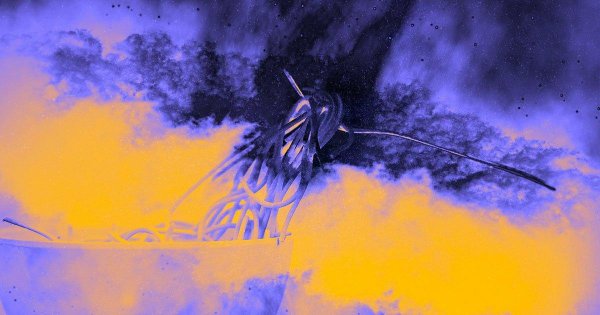
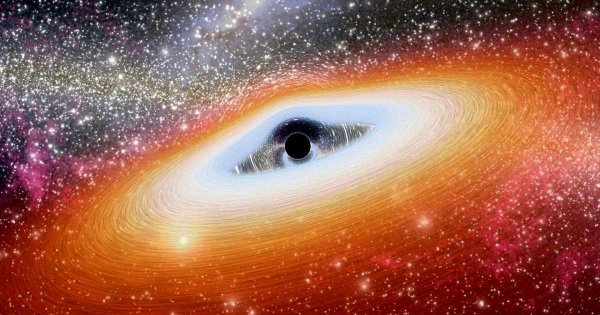
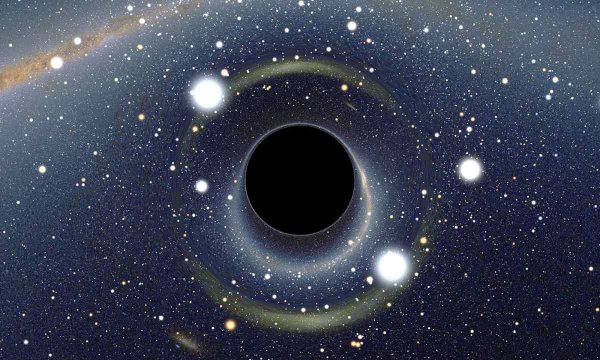
For the first time, astronomers have captured a detailed view of a star being ripped apart by a supermassive black hole in a process that stretches the stellar material into a long, thin strand—an event they describe as spaghettification. The star, located about 215 million light-years from Earth, was similar in mass to our Sun, while the black hole that consumed it was more than a million times heavier.
The event, known as a tidal disruption, occurs when a star ventures too close to a black hole and is torn apart by intense gravitational forces. The new observations, published in the journal Monthly Notices of the Royal Astronomical Society, provide the most complete picture yet of what happens during such a catastrophic encounter.
Lead author Matt Nicholl, a lecturer and Royal Astronomical Society research fellow at the University of Birmingham, said in a statement that the idea of a black hole sucking in a nearby star might sound like science fiction, but it is exactly what happens in a tidal disruption event. He added that the team was able to investigate in detail what happens when a star is eaten by such a monster.
How the Star Was Destroyed
Using instruments at the European Southern Observatory, the researchers tracked the star's material as it fell into the black hole. They found that a significant portion of the stellar debris was blasted back outwards in two powerful jets that shot in opposite directions. The team also created a simulation to show what the event would look like from a close vantage point.
The observations revealed that the star lost about half of its mass to the black hole, which is more than a million times more massive than the star itself. This extreme mass difference is what allowed the black hole's gravity to overcome the star's internal forces and pull it apart.
Why This Matters
Tidal disruption events are rare, and observing one in such detail provides valuable insight into the physics of black holes and the behavior of matter under extreme conditions. The data from this event could help astronomers refine their models of how black holes consume matter and how jets are formed.
The findings also highlight the violent nature of the universe, where a star similar to our own Sun can be destroyed in a matter of hours. While such an event is unlikely to happen to our Sun, the study offers a glimpse into the fate that awaits stars that wander too close to a black hole.
The research was led by scientists at the University of Birmingham and involved an international team of astronomers. The simulation and observational data have been made available for further study.








Comments (0)