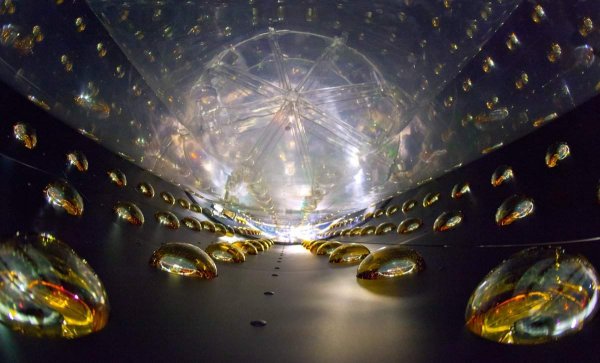
Neutrinos are everywhere—trillions pass through your body each second—yet they remain among the hardest particles to catch. These subatomic ghosts, with nearly zero mass and no electrical charge, barely interact with matter, making them a persistent puzzle for physicists. But their elusiveness is precisely why scientists worldwide are pouring resources into detecting them: neutrinos are messengers from the universe's most violent and mysterious events.
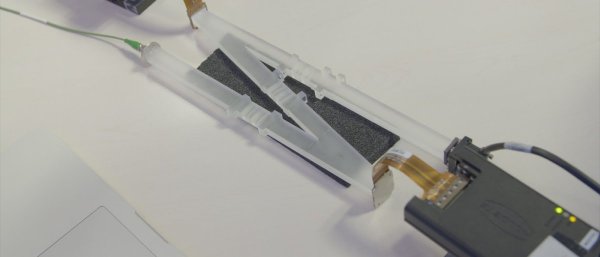
Recent breakthroughs have intensified the hunt. In the past year, two experiments at the Oak Ridge National Laboratory in Tennessee reported first-of-their-kind results, proving that even compact detectors can yield significant physics. The COHERENT experiment, using five detectors each about the size of a milk jug, directly observed the interaction between neutrinos and atomic nuclei—a feat theorized decades ago but never seen until now. Its sibling, PROSPECT, refines those measurements with higher precision, according to a press release from the lab.
These projects are part of a broader global effort. At the South Pole, the IceCube Observatory uses a cubic kilometer of ice to catch neutrino traces, while other facilities employ massive underground tanks and photodetectors. The diversity in scale underscores a key point: neutrino science isn't about size—it's about clever engineering.
Why Neutrinos Matter for Physics
Neutrinos are born from nuclear reactions in stars, supernovae, and cosmic collisions. By studying them, physicists can reconstruct events that shaped the universe, much like archaeologists piecing together ancient artifacts. "Neutrinos tell us a tremendous amount about how the universe is created and held together," said Nathaniel Bowden, a scientist at the DOE's Lawrence Livermore National Laboratory, in an interview with NewsWise. "There's no other way to answer a lot of the questions that we find ourselves having."
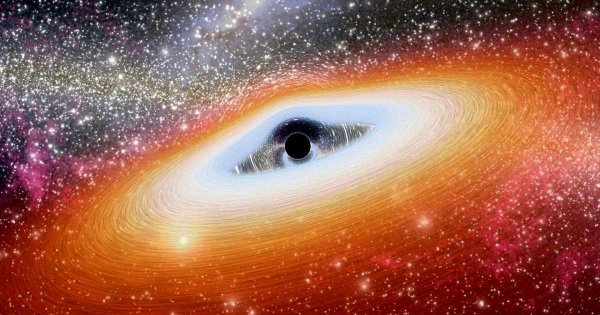
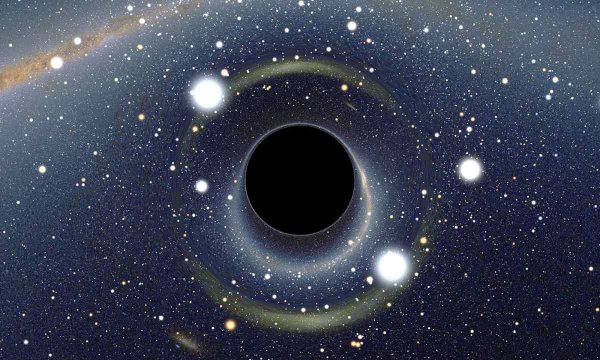
These particles could illuminate dark matter, the invisible substance that makes up most of the universe's mass, and help explain why the cosmos is expanding at an accelerating rate. They might also reveal new forces beyond the Standard Model of particle physics, offering a window into the core of neutron stars and the birth of black holes.
From Tiny Detectors to Big Discoveries
The COHERENT and PROSPECT experiments are modest in size but have already made history. Their 2023 study, published in the journal Science, confirmed a neutrino interaction that had been predicted for decades but never observed. This success challenges the assumption that major physics requires billion-dollar machines.
Critics might question the investment, especially when funding could go to medical research or climate change. But neutrino science has practical spin-offs, including improved nuclear reactor monitoring and potential advances in communication technology. More fundamentally, understanding neutrinos addresses existential questions about the universe's origins and fate.
As Bowden's comment suggests, neutrinos are not just particles—they are keys to a deeper comprehension of reality. The recent results from Oak Ridge are a reminder that scientific progress often comes from persistence and ingenuity, not just scale. With each new observation, physicists edge closer to answering some of the most profound questions in science: How did the universe begin? What is it made of? And what forces govern its evolution?















Comments (0)