







China's Micius Satellite Sets 1,203-Kilometer Entanglement Record

China's Micius Satellite Sets 1,203-Kilometer Entanglement Record

Physicists led by Juan Yin at the Science and Technology University of China used the Micius satellite to distribute entangled photons between two ground stations 1,203 kilometers apart, more than ten times the previous 100-kilometer record. The result, published in Science, supports long-distance quantum communication and testing of quantum physics.

Featured

Top stories this week.

Hand-picked reporting and analysis from across our newsroom.

Green New Deal Ignites Political Firestorm as Allies and Critics Weigh In

Green New Deal Ignites Political Firestorm as Allies and Critics Weigh In

The Green New Deal, a sweeping climate resolution championed by Rep. Alexandria Ocasio-Cortez, has drawn sharp reactions from both sides of the aisle. Supporters praise its ambition, while critics call it unrealistic and socialist. The debate highlights deep divisions over how to address climate change.

Hawaii Surf Swell Sends Waves Over Condos, Forces Rescues

Hawaii Surf Swell Sends Waves Over Condos, Forces Rescues

A powerful south swell described as 'historic' by forecasters slammed Hawaii's shores, sending waves over two-story condos, flooding homes, and prompting hundreds of lifeguard rescues. Video captured by residents shows the ocean's force, while officials warn of continued danger and link the event to sea-level rise.

Italian Team's Giant 3D Printer Builds Low-Cost Homes from Earth

Italian Team's Giant 3D Printer Builds Low-Cost Homes from Earth

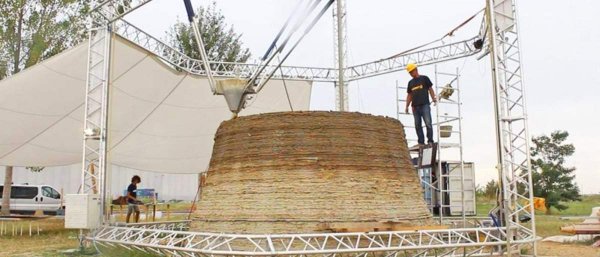
An Italian company has deployed the world's largest 3D printer, BigDelta, to construct affordable homes using mud, clay, and dirt. The 12-meter-tall machine, part of the WASP project, aims to address the global need for 100,000 new housing units daily. The first house is nearing completion, though the printer builds slowly.

Astronomers Detail a Star's Fatal Encounter With a Distant Black Hole

Astronomers Detail a Star's Fatal Encounter With a Distant Black Hole

A star roughly the size of our Sun was torn apart by a black hole 215 million light-years away, in a process astronomers call spaghettification. New observations detail how the star's material was pulled in and ejected in powerful jets. The findings offer a rare glimpse into the violent mechanics of these cosmic events.

Science

Ai