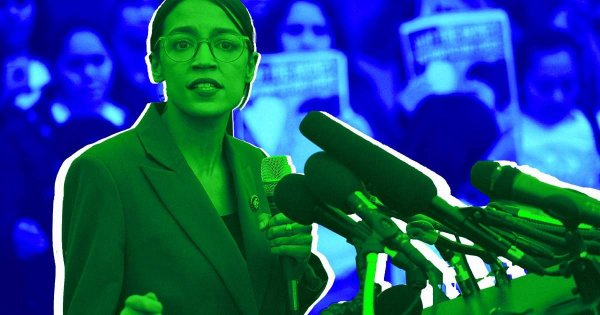
The Green New Deal, a sweeping climate resolution introduced by progressive Democrats and championed by freshman Rep. Alexandria Ocasio-Cortez of New York, has ignited a political firestorm, drawing sharp rebukes from conservatives and cautious praise from some environmental advocates. The non-binding measure, unveiled on Thursday, calls for a dramatic overhaul of U.S. energy policy, aiming for net-zero greenhouse gas emissions within a decade.
Reactions came swiftly from across the political spectrum, with critics dismissing the plan as impractical and supporters lauding its ambition. The resolution, which also proposes job guarantees and universal healthcare, has become a lightning rod in the ongoing debate over how aggressively the nation should combat climate change.
Conservative Critics Cry Foul
Wall Street Journal columnist Kimberley Strassel took to Twitter to mock the proposal, suggesting that if Republicans had tried to craft a fake Democratic bill to show the party's extremism, they could not have done better. Bob Salera, a spokesman for the National Republican Congressional Committee, echoed that sentiment, telling the New York Times that the 'socialist Democrats' were off to a 'great start' with their 'ridiculous' plan. The Republican National Committee also weighed in, branding the resolution a 'socialist wish list.'
Former Energy Secretary Ernest Moniz, who served under President Obama, expressed skepticism about the feasibility of the plan's timeline. He told NPR that he could not see how the nation could possibly transition to zero carbon in a ten-year period, a central goal of the resolution.
Supporters See a Necessary Step
But the plan also drew enthusiastic backing from progressive figures. Senator Bernie Sanders of Vermont, a leading voice for the left, tweeted that climate change is an 'existential disaster' and that a Green New Deal could 'save the planet and create millions of new jobs.' Aliya Haq, federal policy director for the Climate & Clean Energy Program at the Natural Resources Defense Council, called the resolution 'a breath of fresh air' and urged the nation to move quickly to a 100% clean energy economy.
Even some commentators pointed to international examples to counter claims of radicalism. Astrophysicist Katie Mack noted on Twitter that Japan's Shinkansen bullet train, which has operated since 1964, covers a distance similar to Los Angeles to San Francisco in just 2.5 hours, with trains running every 10 minutes at peak times. Her point: high-speed rail is not a new or extreme idea.
Friendly Fire from Within the Party
Not all criticism came from the right. House Speaker Nancy Pelosi, a fellow Democrat, appeared to downplay the resolution in comments to Politico, referring to it as the 'green dream or whatever they call it,' and suggesting it was just one of many ideas the party receives. CNN described her remarks as 'serious shade.'
On the other end of the spectrum, some environmentalists argued the plan did not go far enough. Erich Pica, president of Friends of the Earth, told Bloomberg that by failing to explicitly call for an end to the fossil fuel era, the resolution missed an opportunity to define the scope of the challenge.
The Green New Deal, while non-binding, has already reshaped the political conversation around climate policy, forcing both parties to take a stance on a proposal that could influence future legislation and elections. As the 2020 campaign season heats up, the resolution is likely to remain a central point of contention.













Comments (0)