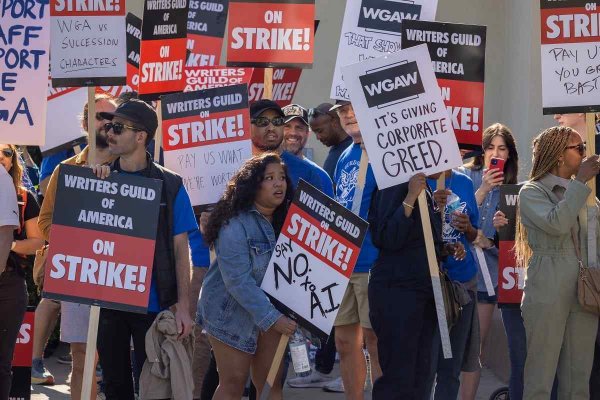
During the ongoing Writers Guild of America strike, a social media post suggesting that AI could effortlessly replace human writers has ignited a firestorm of criticism online. The comment, made by a user identified as powerbottomdad1, mocked the strike by implying that ChatGPT could generate endless textual content, making reliance on "flaky humans" unnecessary. The post quickly drew sharp rebukes from users who defended the value of human creativity and fair compensation, especially in the context of streaming platforms.
The backlash highlights a growing unease about the role of artificial intelligence in creative industries. One respondent noted that while the original post might be trolling, the sentiment is "mega common amongst ppl in tech," reflecting a broader tech culture that often undervalues human labor. Another user questioned what kind of ideal world such an argument envisions, pointing to the callousness of dismissing workers' livelihoods.
The controversy comes as Goldman Sachs projected that up to 300 million jobs globally could be affected by AI automation in the near future. While that estimate includes a range of industries, the creative sector is particularly vulnerable, given AI's ability to generate text, images, and even scripts. However, as many commenters pointed out, the technology is far from perfect, and the notion that it can replace the nuanced, emotional depth of human storytelling remains a stretch.
Beyond the immediate outrage, the incident underscores a deeper concern about plagiarism. AI models like ChatGPT are trained on vast datasets of existing human work, raising questions about originality and intellectual property. If studios were to replace human writers with AI, the risk of producing derivative or plagiarized content becomes a real issue, potentially leading to legal and ethical complications.
The strike itself has been partly driven by demands for protections against AI, but those demands were reportedly struck down in negotiations. This has led to fears that studios might indeed turn to AI as a cost-saving measure, despite the creative and ethical risks. The situation reflects a broader societal debate about the balance between technological progress and the preservation of human jobs and creativity.
Why This Matters
The backlash against the tweet is not just about one insensitive comment; it symbolizes the growing tension between the tech industry's push for automation and the rights of workers in creative fields. As AI continues to advance, the question of how to integrate it without devaluing human labor becomes increasingly urgent. The strike and the online reaction to it serve as a reminder that the future of work is not just an economic issue, but a deeply human one.






Comments (0)