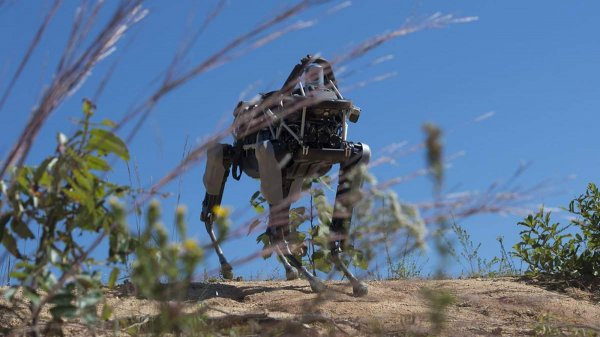
For one week in an undisclosed location, a squad of Marines traded their usual gear for a laptop and a video game controller to pilot a 160-pound, electrically powered quadruped robot through rugged terrain. The exercise, conducted by the Marine Corps Warfighting Lab, marked the latest experiment in integrating legged robots into infantry operations.
The robot, known as Spot and built by Boston Dynamics—a company under Google's parent Alphabet—was put through its paces on hills, in wooded areas, and across urban settings. Operators kept a safe distance, controlling the machine from up to 500 meters (1,640 feet) away using a laptop and a commercial video game controller.
Spot is not the first robot of its kind, but it is notably quieter than earlier models and was designed with enhanced agility, making it better suited for stealthy reconnaissance or support missions. The prototype's performance during the drills will inform future development and potential adoption.
Why the Marines Are Experimenting with Quadrupeds
Capt. James Pineiro, branch head for the Marine Corps Warfighting Lab, said the service wants to explore how quadruped technology can enhance warfighting capabilities. "We want to continue to experiment with quadruped technology and find ways that this can be employed to enhance the Marine Corps warfighting capabilities," Pineiro said in a statement.
The lab is actively investing in robotic research and development, with an eye toward reducing risk to personnel and potentially saving lives. The trials are part of a broader effort to assess how unmanned systems might operate alongside infantry in future conflicts.
Boston Dynamics employees and representatives from the Defense Advanced Research Projects Agency (DARPA) were on hand throughout the week to train the Marines on operating the prototype. The collaboration highlights the military's growing interest in legged robots that can navigate terrain where wheeled or tracked vehicles often struggle.
Spot's quiet operation and agility could make it useful for scouting ahead of patrols, entering dangerous buildings, or carrying equipment in urban combat zones. However, the Marine Corps has not announced any formal procurement plans, and the system remains in the experimental phase.
The exercise underscores a broader trend across the U.S. military, which has been testing various robotic platforms—from ground vehicles to aerial drones—to complement human troops. For the Marines, the goal is to determine whether quadruped robots can provide a tactical edge without adding undue burden to the unit.
As the Warfighting Lab continues its research, the data gathered from these urban terrain drills will be key to deciding whether Spot or similar systems are integrated into future Marine Corps operations.

















Comments (0)