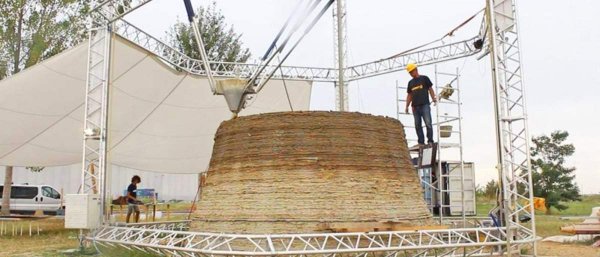
An Italian engineering initiative has pushed 3D printing into the realm of housing construction, using a machine that stands 12 meters tall and prints with a surprisingly humble material: mud. The project, known as World's Advanced Saving Project (WASP), is nearing completion of its first home, a structure built from earth-based materials that could offer a low-cost solution to a pressing global housing shortage.
BigDelta, the printer at the heart of the project, is described by its creators as the largest 3D printer ever built. Its dimensions are striking: a body over 6 meters wide, and a height of 12 meters (39 feet). Yet despite its scale, it operates on less than 100 watts of power—a fraction of what a typical household appliance consumes. The machine's nozzle serves a dual purpose, both dispensing and mixing the construction materials, which currently include dirt, clay, and mud. The team is also experimenting with adding soil and straw to the mix, which could further expand the range of natural resources usable for building.
The impetus for the project comes from stark statistics. In a press release, the WASP team cited international estimates that over 4 billion people will require adequate housing in the coming years. The United Nations has calculated that to meet this demand, an average of 100,000 new housing units must be built every day over the next 15 years. This staggering figure underscores the urgency for innovative, cost-effective construction methods that can be deployed rapidly and sustainably.
BigDelta was first unveiled at an event called "The Reality of Dream" last year, where the team announced the start of their low-cost housing project. Since then, the printer has been steadily working on its first house. However, the pace is not swift. The machine can build up to 1 meter (3.3 feet) of material per day, which means the construction of a full home takes considerable time. For those in urgent need of shelter, this may not be the quickest solution, but the potential for using locally sourced materials and minimal energy could make it a viable option in many regions.
Why This Matters for Global Housing
The WASP project represents a novel approach to addressing the housing crisis, particularly in developing areas where conventional building materials are expensive or scarce. By using mud and clay, which are abundant in many parts of the world, the cost of construction could drop dramatically. The printer's low power consumption also makes it suitable for off-grid locations, where electricity is unreliable or unavailable.
While the technology is still in its early stages, the completion of the first BigDelta house will be a significant milestone. It will demonstrate whether 3D printing with natural materials can produce structures that are durable, safe, and comfortable enough for permanent habitation. The project's success could pave the way for scaling up the technology, potentially leading to the creation of entire communities built from the earth beneath their feet.
As the world grapples with the challenge of providing adequate housing for billions, the combination of ancient building materials and cutting-edge digital fabrication offers a glimpse of a future where homes are not only affordable but also environmentally sustainable. The WASP team's work is a reminder that sometimes the most innovative solutions are rooted in the simplest resources.







Comments (0)