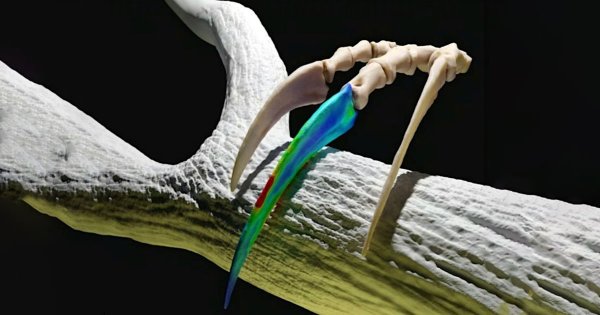
A new analysis of the dinosaur Therizinosaurus, known for its enormous scythe-like claws, suggests these formidable appendages were more for show than for battle. Researchers at the University of Bristol used computer simulations and 3D modeling to test the mechanical strength of the claws, concluding they were too fragile for combat. The findings, published in a recent study, offer a fresh perspective on a creature that has been popularized in films like "Jurassic World" as a fearsome predator.
Therizinosaurus, which lived during the Late Triassic and Cretaceous periods, roughly 220 to 66 million years ago, could reach lengths of up to 40 feet. Its most distinctive feature was its three-foot-long claws on each hand, which have often been compared to samurai swords. The study's co-author, Chun-Chi Liao, a paleontologist at the University of Bristol, described the dinosaur as "Edward Scissorhands on speed," a colorful reference to its striking appearance.
Despite its intimidating look, the research indicates that the claws were structurally unsuited for fighting. Zichuan Qin, a doctoral student at the University of Bristol and lead author of the study, told Live Science that the claws "cannot bear any stress," meaning they could not have been used effectively in defense or aggression. This contradicts the common portrayal of Therizinosaurus as a slasher, a depiction that has been reinforced by its role in recent Hollywood films.
What Were the Claws For?
The question then arises: if not for combat, what purpose did these massive claws serve? The researchers propose that they were likely used for display, possibly to attract mates. "Not all therizinosaur hand claws were so useless in combat, but most other related species could use their claws as powerful hooking tools when feeding on leaves from the trees," Liao explained. "So we conclude the largest claws of any animal ever were actually useless in mechanical function, and so must have evolved under sexual selection to be used in display."
This theory aligns with the idea that, like the elaborate plumage of birds of paradise, the claws were a signal of fitness and desirability. The dinosaurs with the longest claws may have been considered the most attractive, driving the evolution of these oversized features.
Another possibility, suggested by study co-author Mike Benton, a professor of vertebrate paleontology at the University of Bristol, is that the claws were used for grooming. "These animals were feathered, and for all we know, they could have used them like elaborate combs," he told Live Science. This would add a practical, social dimension to the claws, beyond mere display.
The study adds to a growing body of research that challenges simplistic views of dinosaur behavior, emphasizing that some features may have evolved for social or reproductive reasons rather than survival functions. As scientists continue to refine their understanding, the image of Therizinosaurus as a gentle giant, rather than a terrifying predator, becomes more plausible.
















Comments (0)