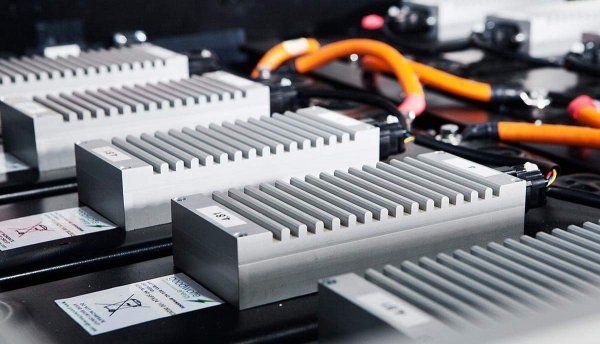
AUSTIN, Texas — A research team at the University of Texas at Austin has unveiled a new class of all-solid-state battery cells that could dramatically improve the safety, speed, and range of rechargeable batteries used in electric vehicles, smartphones, and grid storage. The breakthrough, led by 94-year-old John Goodenough, a professor in the Cockrell School of Engineering and co-inventor of the lithium-ion battery, was published in the journal Energy & Environmental Science.
The new cells replace the flammable liquid electrolytes found in conventional lithium-ion batteries with a solid glass electrolyte. This design allows the use of an alkali-metal anode—such as lithium, sodium, or potassium—which is not feasible with traditional liquid-based cells. The result is a battery that can store at least three times more energy per unit volume than current lithium-ion batteries, a key metric for extending the driving range of electric vehicles.
In laboratory tests, the UT Austin cells demonstrated more than 1,200 charge-discharge cycles with low internal resistance, indicating a long operational lifespan. The glass electrolyte also enables rapid charging, reducing recharge time from hours to minutes, according to the researchers.
Safety is a major advantage of the new design. In conventional lithium-ion batteries, fast charging can cause dendrites—tiny metal whiskers—to form and pierce the liquid electrolyte, leading to short circuits, fires, and even explosions. The solid glass electrolyte suppresses dendrite formation, making the battery noncombustible and inherently safer.
Cold-Weather Performance and Materials
The glass electrolyte maintains high conductivity at temperatures as low as -20 degrees Celsius, a significant improvement over existing solid-state batteries, which typically require operating temperatures above 60 degrees Celsius. This means electric vehicles equipped with these cells could perform reliably in subzero climates, a common limitation of current battery technology.
The researchers also highlight the environmental and cost benefits of using sodium, which can be extracted from seawater, as a substitute for lithium. “The glass electrolytes allow for the substitution of low-cost sodium for lithium,” said Maria Helena Braga, a senior research fellow at the Cockrell School and co-author of the study. Braga began developing solid-glass electrolytes at the University of Porto in Portugal before collaborating with Goodenough and researcher Andrew J. Murchison at UT Austin about two years ago.
Path to Commercialization
The new electrolyte formulation is patented through the UT Austin Office of Technology Commercialization. Goodenough and Braga are continuing their research and are pursuing additional patents. In the near term, they aim to partner with battery manufacturers to test the materials in electric vehicles and stationary energy storage systems.
While the technology is still in the research phase, the potential impact on the energy sector is substantial. If scaled commercially, the solid-state battery could address key barriers to EV adoption—range anxiety, charging time, and safety—while supporting the broader transition to renewable energy storage.















Comments (0)