
Artificial intelligence is projected to match human learning capabilities within the next three decades, according to a prominent venture capitalist who has consulted with leading researchers in the field. Jim Breyer, founder and CEO of Breyer Capital, made the forecast at the CNBC and Institutional Investor's Delivering Alpha conference earlier this month, stating that the median estimate among AI experts points to 2050 as the year when machines could achieve self-learning at human-level intelligence.
Breyer, who has invested heavily in AI and human-assisted intelligence (HAI), said his conversations with researchers on university campuses revealed a consensus that the technology's learning capacity will become "singular" by mid-century. "When I visit campuses and speak to the AI experts, there is a median year of 2050 where they think the self-learning capability of AI will be singular and will be at human-level intelligence," he explained. He acknowledged that not everyone shares this view, noting it is "median data from some of the best AI researchers in the world."
The prediction comes amid a broader debate about AI's potential impact. Tesla CEO Elon Musk has repeatedly called AI the biggest threat to civilization, while the late physicist Stephen Hawking warned that it could disrupt middle-class employment and even endanger humanity, prompting efforts to prevent an "AI apocalypse." However, many researchers have pushed back against such dire scenarios, arguing that Musk's concerns focus on far-fetched super-intelligence takeover plots. They contend that AI is only dangerous if deployed without adequate foresight and ethical safeguards.
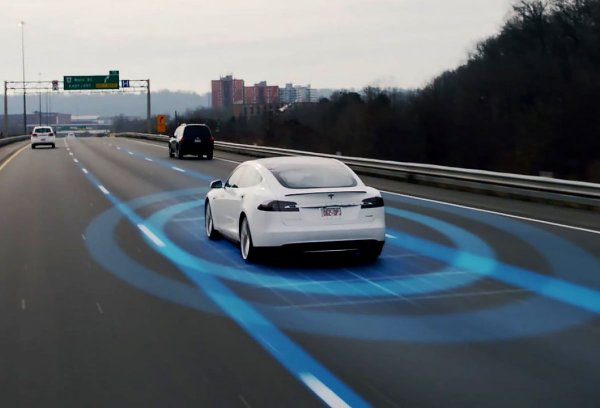
Breyer, who has not dismissed Musk's warnings, remains optimistic about AI's near-term benefits. He pointed to its use in self-driving vehicles and its potential to strengthen defenses against cyber attacks. "For the next decade or two, the good that comes out of proper, safe and interesting AI applications is enormous, and I am very excited about being part of investing in it," he said.
Why the 2050 Timeline Matters
The 2050 projection is not a guarantee but a median estimate, reflecting the uncertainty that even top researchers acknowledge. Some experts believe human-level AI could arrive sooner, while others argue it may never happen. Breyer's comments highlight the growing consensus that AI will continue to advance rapidly, with significant implications for industries, labor markets, and daily life.
As AI development accelerates, the technology is already embedded in everyday products and services, from voice assistants to recommendation algorithms. The question is no longer whether AI will transform society, but how quickly and with what consequences. Breyer's investment strategy suggests he is betting on a future where AI enhances human capabilities rather than replaces them, a vision that aligns with his focus on HAI.
For now, the timeline remains speculative, but the debate over AI's trajectory is far from academic. Policymakers, businesses, and researchers are grappling with how to harness AI's potential while mitigating its risks. Breyer's prediction adds a data-driven voice to that conversation, even as he acknowledges the possibility that 2050 may be optimistic.
Whether AI reaches human-level learning by 2050 or later, its evolution is already reshaping the technological landscape. The coming decades will reveal whether the median estimate holds, but the direction of travel is clear: AI is here to stay, and its impact will be profound.















Comments (0)