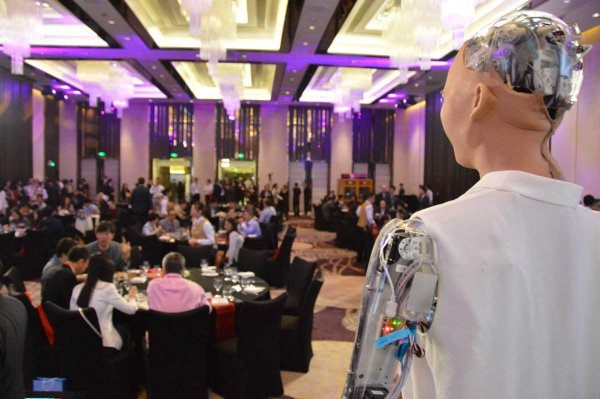
Sophia, the humanoid robot that made history as the first robot to receive citizenship from Saudi Arabia in October, is now lending her name to a crowdfunding effort aimed at advancing artificial intelligence. The initiative, led by SingularityNET, seeks to build a blockchain-based marketplace where AI systems can interact, share data, and learn from one another.
SingularityNET's platform would allow developers to access datasets and analytical tools using blockchain tokens, while also enabling them to monetize their own AI services. The company's founder and CEO, Ben Goertzel, argues that no existing platform supports such interoperability among AI agents, calling the proposed system a potential breakthrough in AI evolution.
The project has already attracted more than 100 AI organizations and developers, but the upcoming token sale is designed to open the platform to a broader audience. Scheduled for December 8, 2017, at 12 pm Eastern Time, the sale will offer up to 1 billion AGI tokens, with a hard cap of $36 million.
According to SingularityNET's white paper, Sophia will be among the first agents on the platform. This means other developers could tap into her cognitive services, while she would also benefit from the collective intelligence of other agents, effectively upgrading her own capabilities.
Why a Decentralized Approach?
The combination of blockchain and AI represents a convergence of two transformative technologies. Blockchain tokens have already been used to crowdfund projects in music, film, and energy distribution, demonstrating their potential beyond traditional currency. Meanwhile, AI's impact is visible in healthcare, finance, and agriculture, with the industry projected to grow from $233.8 billion in 2017 to $3.1 trillion by 2025, according to Transparency Market Research.
However, some tech leaders have raised concerns about the concentration of AI power. Elon Musk, in a recent interview with Rolling Stone, highlighted the risks of a single company like Google controlling artificial general intelligence. SingularityNET's community-based model aims to avoid such monopolization by putting control in the hands of a distributed network.
Goertzel emphasized that placing the community in charge would ensure the platform benefits all users, not just a select few. For Sophia, this could mean a significant boost in her intelligence, while for the public, it offers a chance to shape the future of AI development.
The success of the token sale remains to be seen, but the project underscores a growing trend toward decentralized, collaborative approaches in cutting-edge technology.












Comments (0)