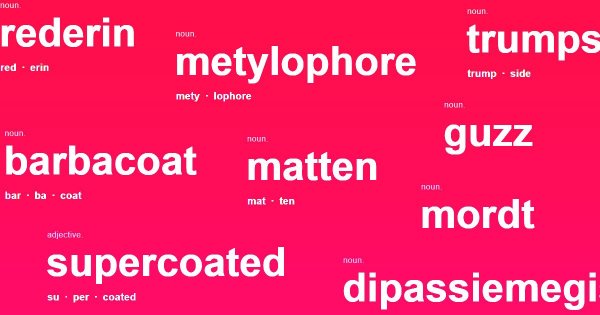
Have you ever stumbled upon a word that feels oddly familiar yet defies definition? A new website, thisworddoesnotexist.com, is generating an endless stream of such terms—each one crafted by an algorithm to sound convincingly real while being entirely invented.
The project, created by Thomas Dimson, a former engineer at Instagram, leverages OpenAI's GPT-2 language model to produce these synthetic words. Each refresh of the page yields a fresh creation, with varying degrees of believability, as reported by The Verge.
GPT-2, an algorithm renowned for generating human-like text, has been used for a range of creative applications, from text-based adventure games to academic essays. However, unlike a traditional dictionary, GPT-2 wasn't trained on lexicographic data. Instead, it learned language patterns by scraping 8 million websites linked from popular Reddit posts, according to The Verge. This training method explains why some of the generated definitions can be slightly off-kilter.
Why This Matters for AI
The ability to invent plausible words is a notable technical feat, given that understanding word meanings has long been a stumbling block for artificial intelligence. While the site is playful, it underscores a deeper point about how AI processes language—recognizing patterns and structures without true comprehension.
Dimson's creation joins a growing list of GPT-2-powered projects that showcase the model's versatility. The algorithm's knack for producing coherent-sounding text has made it a favorite among developers experimenting with generative AI.
For now, the site serves as a quirky demonstration of AI's linguistic capabilities, offering visitors a glimpse into how machines mimic human creativity. But it also highlights the gap between surface-level fluency and genuine semantic understanding—a challenge that remains at the forefront of AI research.
















Comments (0)