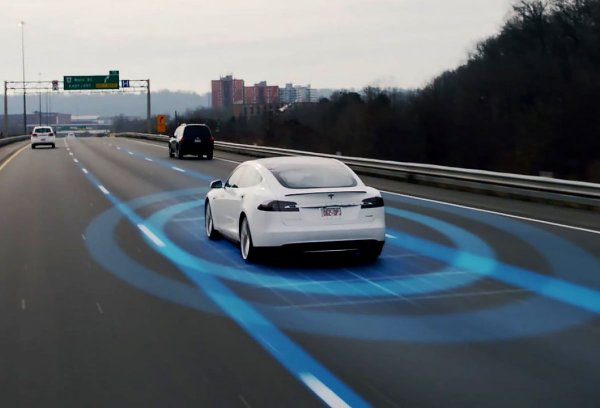
In a courtroom last month, attorneys representing Tesla CEO Elon Musk argued that 2016 recordings of his promises about the car's Autopilot feature might have been artificially manipulated. The judge rejected the claim and ordered Musk to testify under oath, but the episode underscores a growing legal tactic: using the existence of deepfake technology to cast doubt on genuine evidence.
This approach, which legal experts call the "deepfake defense," is not confined to high-profile corporate cases. Two defendants charged in connection with the January 6 attack on the U.S. Capitol have attempted to dismiss video evidence by suggesting it could have been AI-generated. One of them, Guy Reffitt, argued that footage showing him at the Capitol was a deepfake; a judge dismissed that argument, and Reffitt was convicted.
The strategy reflects a broader anxiety among digital forensics experts, who fear that the mere possibility of AI manipulation could undermine the credibility of authentic recordings. Hany Farid, a professor at the University of California, Berkeley, told NPR that he worries about a future where evidence of "police violence, human rights violations, a politician saying something inappropriate or illegal" is dismissed because it might be fake. "Suddenly there's no more reality," he said.
Legal scholars have named this phenomenon the "Liar's Dividend." In a 2018 law review article, Bobby Chesney and Danielle Citron wrote that as the public becomes aware that video and audio can be convincingly faked, some individuals will try to escape accountability by denouncing authentic material as deepfakes. "A skeptical public will be primed to doubt the authenticity of real audio and video evidence," they wrote.
The legal system is struggling to respond. Rebecca Delfino, associate dean at Loyola Law School in Los Angeles, noted in a February review paper that the law does not provide a clear answer to the deepfake defense. She argued that lawyers are using it to "exploit juror bias and skepticism about what is real," a development she says is troubling because current legal guidance was "developed before the advent of deepfake technology."
The stakes extend beyond the courtroom. With AI tools becoming more accessible, creating convincing fake videos no longer requires sophisticated expertise. As Britt Paris, an assistant professor at Rutgers University, told the New York Times, "It's not just people with sophisticated computational technology... Instead, it's a free app."
Already this year, deepfaked clips of President Joe Biden declaring a national draft and podcaster Joe Rogan promoting male enhancement products have circulated online. Political groups have also embraced the technology; the Republican National Committee released an attack ad featuring AI-generated images of a Chinese invasion of Taiwan and border scenes described as "overrun" by "illegals."
Nina Schick, a political scientist and author of the book "Deepfakes," told CBS News that without safeguards, the erosion of trust could be irreversible. "We really have to think about how do we inbuild some kind of security so that we can ensure that there is some degree of trust with all the digital content that we interact with on a day-to-day basis," she said. "Because if we don't, then any idea of a shared reality or a shared objective reality is absolutely going to disappear."
Courts have so far rejected most deepfake defenses, but there is no guarantee that will continue. As AI tools improve and become more widespread, the pressure on the legal system to adapt is likely to intensify. The challenge, as Delfino put it, is that the deepfake defense is a new test for the adversarial process and its truth-seeking function.

Comments (0)