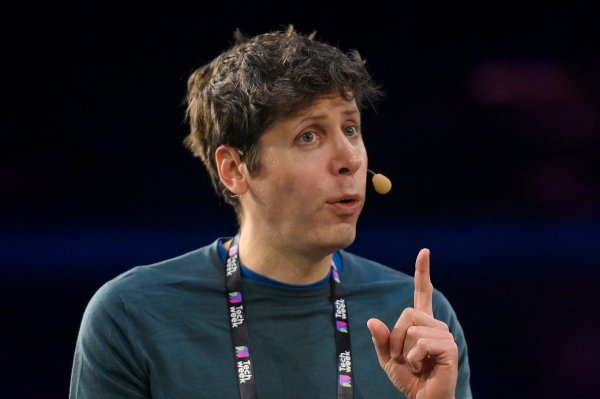
OpenAI CEO Sam Altman has signaled that the coming year could mark a turning point for artificial intelligence, telling a Y Combinator audience that he expects artificial general intelligence (AGI) to be achieved in 2025. The statement, made during a fireside chat with Y Combinator president and CEO Garry Tan, came as Altman also revealed a personal milestone: he and his husband, Oliver Mulherin, are expecting a child.
When Tan asked Altman what he was most looking forward to in the new year, Altman's immediate reply was "AGI," adding that he was "excited for that." The offhand tone of the answer contrasted with the gravity of the prediction, which has been a subject of intense debate among researchers and policymakers. Altman's comments were made just days after he told the "20VC" podcast that within five years, the technology might already be a memory.
"I think in 5 years, it looks like we have an unbelievably rapid rate of improvement in technology itself," Altman said on the podcast. "People are like, man, the AGI moment came and went." He also predicted that society itself would change "surprisingly little" in that timeframe, a view he has expressed before.
Internal Skepticism and Readiness Concerns
Altman's optimism is not universally shared within OpenAI. In late 2024, Miles Brundage, the company's outgoing AGI readiness czar, wrote on his personal Substack that he had resigned because he did not believe the firm was prepared to handle the implications of what it is building. Following his departure, OpenAI disbanded its AGI readiness team, a move that some observers saw as underscoring the internal divide.
The juxtaposition of Altman's confident prediction with the dissolution of the readiness team raises questions about the company's approach to safety. While Altman has consistently framed AGI as a transformative but manageable milestone, others in the field warn of unintended consequences. The timeline itself remains a matter of speculation; no public technical roadmap from OpenAI has specified a definitive date for AGI.
Altman's personal announcement, made during the same conversation, drew a warm response from Tan, who congratulated him. Altman said he was "more excited for that than I've probably ever been," calling it "the thing I'm most excited for, ever, in life." The juxtaposition of the two announcements—first AGI, then fatherhood—prompted some lighthearted commentary about priorities, but also highlighted the dual nature of the year ahead for the CEO.
Broader Implications
The timing of Altman's remarks is notable, coming as the AI industry faces increased scrutiny from regulators and the public. If AGI were to arrive in 2025, it would represent a leap far beyond current systems, which, despite their capabilities, remain narrow in scope. The term "AGI" itself is contested; some researchers argue that human-level intelligence may still be decades away, while others believe it could emerge sooner than expected.
For now, Altman's prediction adds to a growing chorus of voices within the tech community who see 2025 as a pivotal year. Whether that proves accurate will depend on breakthroughs in model architecture, computational power, and the ability to ensure safety. As the debate continues, OpenAI's actions—including the fate of its readiness team—will be closely watched.
Altman's dual announcement, delivered in a casual setting, offers a rare glimpse into the mindset of a leader who is simultaneously steering one of the most influential AI labs and preparing for a personal life change. The coming year will test both his predictions and his ability to manage the expectations he has set.














Comments (0)