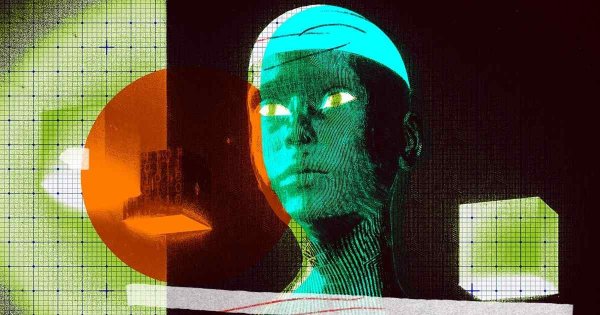
A recent survey by EduBirdie, an online paper-writing service, has shed light on Gen Z's perceptions of artificial intelligence, revealing that a significant portion of the generation believes AI is already sentient. The study, which polled 2,000 individuals born between 1997 and 2012, found that 25% of respondents think AI is currently conscious, while 52% believe it will become conscious in the future. These figures suggest a notable divergence from expert consensus, which generally holds that AI lacks consciousness.
The survey also explored fears of an AI takeover, with 58% of participants expressing that AI will eventually "take over" the world. Among those, 44% anticipate this could happen within the next two decades. Such concerns may explain why 69% of respondents said they always use polite language, such as "please" and "thank you," when interacting with chatbots. This behavior aligns with a separate TechRadar survey from late 2024, which found that 67% of Americans and 71% of Brits are polite to ChatGPT. Notably, 12% of the 1,000 TechRadar respondents admitted to being courteous to the chatbot out of fear of future repercussions.
The question of AI consciousness has been a contentious topic for years, even before ChatGPT brought AI into mainstream discourse. In February 2022, Ilya Sutskever, co-founder and former chief scientist of OpenAI, sparked debate with a tweet suggesting that "today's large neural networks are slightly conscious." His statement ignited a flurry of discussion among machine learning researchers, though most experts maintained that AI is not conscious and may never be.
Notable Dissent and Its Consequences
Despite the general expert consensus, there have been notable dissenters. In 2022, Blake Lemoine, a Google engineer, was fired after claiming in a Washington Post interview that Google's LaMDA (Language Model for Dialogue Applications) had achieved sentience. His assertions were widely disputed, and he was subsequently dismissed from the company.
The EduBirdie survey underscores a broader trend: as AI systems become more sophisticated and human-like, people are forming emotional connections and developing beliefs about their internal states. This phenomenon, while not new, is likely to intensify, potentially leading to societal divisions over how AI should be treated and regulated.
These findings raise important questions about the intersection of technology and psychology, particularly for younger generations who are growing up with AI as a constant presence. As AI continues to evolve, so too will the public's perceptions and anxieties, making it crucial for researchers and policymakers to address these concerns proactively.







Comments (0)